
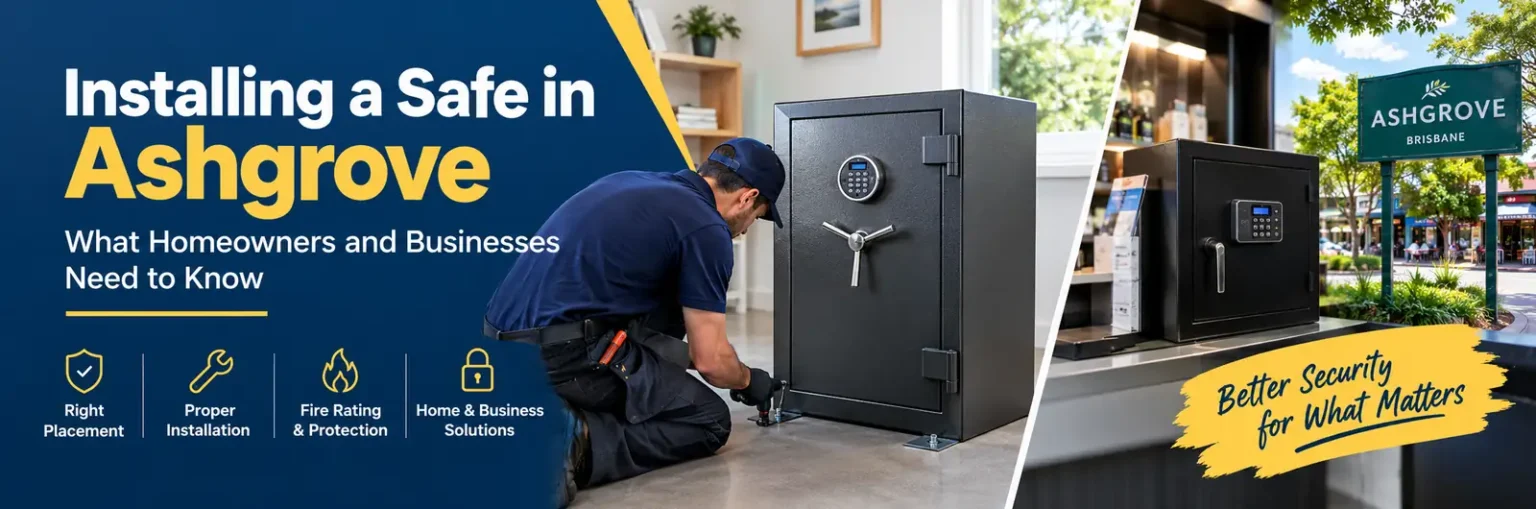
A properly installed safe is only as secure as its placement, mounting, and fire rating — getting any of those wrong undermines the whole point of having one. Whether you’re protecting documents at home or cash and stock in a small business, a few key decisions make the difference between a safe that genuinely works and one that just looks the part.
This guide walks through where to install a safe, how home and business needs differ, and what to consider before choosing the right unit for your Ashgrove property.
From character homes with original timber flooring to small businesses along local shopping strips, Ashgrove’s mix of property types means a one-size-fits-all approach rarely gives the best result.
What to Know Before Installing a Safe
Getting the basics right from the start avoids costly mistakes later.
Why Safe Installation Matters
A safe that isn’t properly secured to a floor or wall can simply be carried off during a break-in, which defeats its entire purpose regardless of how strong the unit itself is.
This is one of the most overlooked aspects of home and business security — people invest in a quality safe but skip proper installation, leaving the single most important step incomplete.
Common Mistakes to Avoid
The most common mistake is choosing a safe based on size alone, without considering fire rating, mounting requirements, or where it will actually sit in the property.
Thinking About It Only After Something Goes Wrong
Most people only start researching safe installation after a break-in or a close call, when the smarter approach is treating it as preventative, not reactive, security.
Where to Install a Safe at Home
Placement matters just as much as the safe itself when it comes to genuine security.
Best Locations for a Home Safe
A safe hidden from obvious sightlines, away from exterior walls, and in a low-traffic area of the home is far less likely to be found or targeted during a break-in.
Wall Safe vs Floor Safe
Wall safes suit smaller valuables and documents, while floor safes generally offer more space and are harder to remove once properly bolted down.
Avoiding Obvious Rooms Entirely
Bedrooms and home offices are the first places intruders check, so considering a less predictable spot — a laundry, a garage, or a built-in storage area — can genuinely improve a safe’s effectiveness.
“A safe’s strength means little if it’s sitting in plain sight by the front door.”
Safe Installation for Small Businesses
Business safes carry different demands than a typical home setup.
Business Safe Security Standards
Commercial safes often need to meet specific insurance or compliance requirements, particularly for businesses holding cash, sensitive documents, or regulated items on-site.
Checking these standards before purchasing avoids the costly situation of buying a safe that technically works, but doesn’t actually meet what your insurer or industry requires.
Bolting a Safe to the Floor
For any business safe, anchoring it securely to the floor or a structural wall isn’t optional — it’s one of the most basic steps that genuinely prevents theft of the entire unit.
Staff Access and Accountability
Businesses often need a system for managing who can access the safe and when, particularly where multiple staff members handle cash or sensitive stock throughout the day.
Fireproof vs Security Safe Which Do You Need
Understanding the difference helps you choose the right category, not just the right size:
- Fireproof safes protect contents from heat and smoke during a fire
- Security safes focus on resisting forced entry and theft
- Many businesses benefit from a combination unit rated for both
- Document-heavy homes often prioritise fire protection first
- Cash or valuables-heavy properties often prioritise theft resistance first
Choosing the Right Safe Size
Size decisions are easy to get wrong without thinking a few years ahead.
What to Consider Before Buying
Think beyond your current needs — safes are rarely upgraded often, so leaving a little extra capacity avoids needing a full replacement down the track.
Getting Professional Installation Advice
Always get a professional opinion on floor load capacity before installing a heavy safe upstairs — it’s a detail many people overlook entirely.
Matching the Safe to What You’re Actually Storing
A safe sized for jewellery and passports looks very different to one built for business cash handling or bulky document archives, so it’s worth listing exactly what needs protecting before shopping around.
Safe Installation Considerations Specific to Ashgrove Properties
A few local factors are worth keeping in mind for homes and businesses in the area.
Older Homes and Floor Structure
Many Ashgrove homes feature timber flooring that requires careful assessment before a heavy floor safe is installed, to ensure the structure can genuinely support the weight long term.
Small Business Premises Near Local Shopping Strips
Businesses operating near Ashgrove’s local shopping areas often benefit from a safe positioned away from street-facing windows, reducing visibility to passers-by.
Expert tip: Ask your locksmith about discreet safe placement options that still allow quick, practical access during business hours.
Working With a Local Locksmith for Safe Installation
Getting professional input early avoids most of the common installation issues altogether.
Assessing Your Property Before Installation
A locksmith will typically assess wall type, flooring, and access points before recommending where a safe should sit, rather than simply installing wherever is most convenient.
Ongoing Maintenance and Access
Safes benefit from periodic checks to make sure mounting hardware remains secure and locking mechanisms continue to function smoothly over time.
Updating Access Codes and Combinations
For both homes and businesses, it’s worth updating access codes whenever staff, tenants, or household circumstances change, rather than leaving the same combination in place indefinitely.
Digital vs Combination Safes Which Suits You Better
Modern safes generally come in two main locking styles, each with its own trade-offs.
Digital Keypad Safes
Digital keypad safes offer quick access and the ability to change codes easily, making them a popular choice for businesses that need frequent, fast access throughout the day.
Traditional Combination Safes
Combination dial safes don’t rely on batteries, which some homeowners prefer for long-term reliability, though they generally take slightly longer to open in practice.
Insurance Considerations for Safe Installation
A properly installed and rated safe can also play a role in how your insurance policy treats valuables or business assets.
Checking Your Policy Requirements
Some insurance policies specify a minimum safe rating or installation standard for claims involving cash or high-value items, so it’s worth checking your policy before assuming any safe will satisfy coverage requirements.
Keeping Documentation of Installation
Keeping receipts, certification, and installation details on file can make an insurance claim significantly smoother if the safe is ever involved in an incident.
Conclusion
Installing a safe isn’t just about buying a strong unit — it’s about placement, mounting, and choosing the right category for what you’re actually protecting. A well-installed safe gives homeowners and businesses alike genuine peace of mind, not just the appearance of security.
It’s also one of those decisions that’s far easier to get right the first time than to fix after the fact, since relocating or re-anchoring an already-installed safe is a much bigger job than planning it properly from the start.
If you’re considering a safe for your Ashgrove home or business, a conversation with a local locksmith is the best first step toward getting the installation right the first time.