
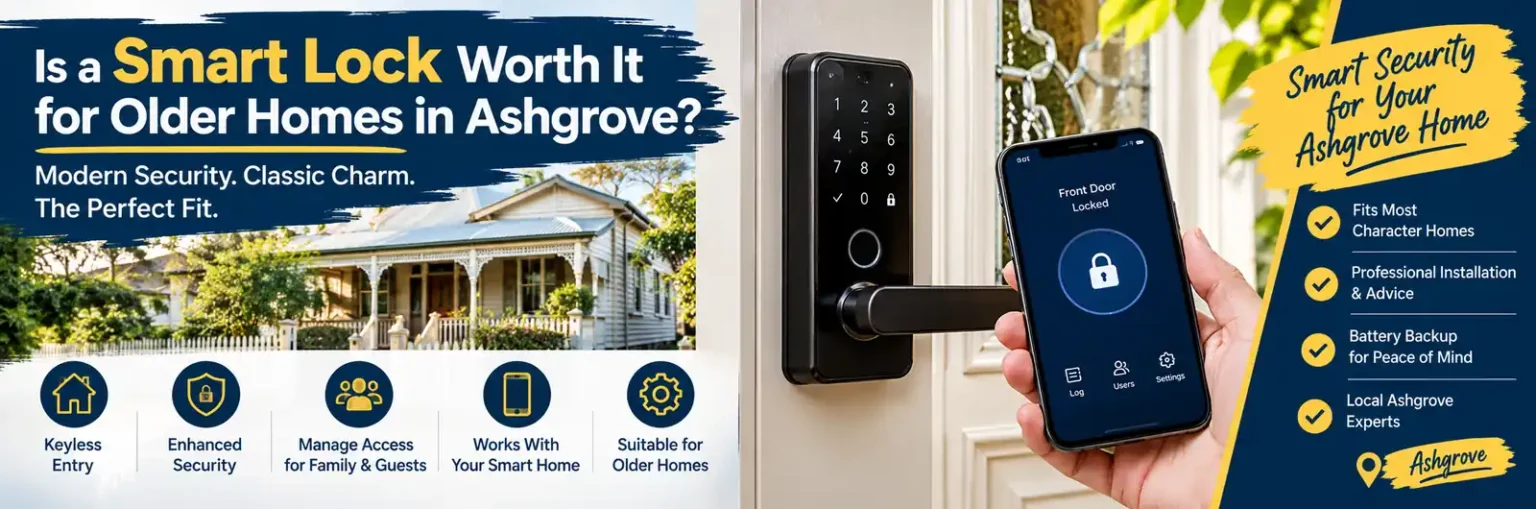
Yes, a smart lock is generally worth it for older homes in Ashgrove, as long as the door and frame are properly assessed first. Most older Queenslander-style homes can be fitted with a smart lock without major issues, but a few extra checks matter more than they would on a newer build.
This guide covers whether smart locks genuinely suit older homes, how they compare to traditional deadbolts, what affects installation, and how to choose the right option for an Ashgrove property.
Ashgrove’s mix of character Queenslanders and newer townhouses means the answer isn’t always the same from one street to the next, which is exactly why a proper assessment matters more than a generic yes or no.
Is a Smart Lock Worth It for Older Homes
The short answer is yes for most homes, though the value depends on a few practical factors.
What Makes Older Homes Different
Older homes often have timber doors, non-standard door thicknesses, and frames that have shifted slightly over the decades. None of these are dealbreakers, but they do mean installation isn’t always as simple as a straight swap.
Where Smart Locks Genuinely Add Value
Keyless entry removes the risk of a lost or copied key, which matters more in older homes where the key history is often unclear after years of previous tenants or owners.
Peace of Mind for Family Homes
For families with kids who forget keys, or elderly parents who struggle with traditional deadbolts, a smart lock’s keypad or app-based entry can genuinely simplify daily life without compromising on security.
Smart Lock vs Traditional Deadbolt in an Older Home
Understanding how the two compare helps set realistic expectations before upgrading.
Security Grade Comparison
A quality smart lock rated to the same grading standard as a traditional deadbolt offers equivalent physical security, so you’re not trading safety for convenience when choosing a reputable brand.
Convenience and Daily Use
Remote access, activity logs, and the ability to let in a tradesperson without being home are genuine, everyday advantages that a traditional lock simply can’t offer.
Integration With Existing Home Security
Many smart locks pair with existing alarm systems or cameras, giving older homes a more connected security setup without needing to rewire or overhaul the whole property.
“A smart lock doesn’t replace good security — it adds visibility and convenience on top of it.”
Can Smart Locks Be Installed on Old Doors
In most cases, yes, though door condition plays a bigger role than people expect.
Door and Frame Compatibility
Standard deadbolt-prepped doors are usually compatible with little to no modification. Non-standard bore sizes or older mortice locks may need adjustment before a smart lock fits properly.
When a Locksmith Needs to Adjust the Door First
If your door frame has shifted over time, a locksmith will often need to realign it before installation, otherwise the lock can jam or fail to engage properly.
Checking Door Thickness Before You Buy
Older timber doors sometimes sit outside the standard thickness range most smart locks are designed for. A quick measurement before purchasing saves the hassle of returning an incompatible unit later.
What Affects Smart Lock Installation
A few practical factors determine how straightforward installation will be.
Door Type and Lock Compatibility
Solid timber doors, older mortice setups, and glass-panel doors near Ashgrove’s character homes can all affect how a smart lock is fitted and whether extra hardware is needed.
DIY vs Professional Installation
Standard installations can sometimes be done without help, but older homes with non-standard doors genuinely benefit from professional installation to avoid alignment issues later.
Connectivity in Older Floor Plans
Thicker walls in older homes can occasionally weaken Wi-Fi signal to an entry door, so it’s worth checking connectivity at the install location before committing to a fully app-dependent system.
Expert tip: Always test a smart lock’s manual override before relying on it fully — battery backup access matters more than people realise.
Pros and Cons of Smart Locks for Older Homes
A balanced look at what to expect:
- Keyless entry removes lost-key risk entirely
- Activity logs show exactly who’s coming and going
- Remote access lets you manage entry for guests or tradespeople
- Installation can require door or frame adjustment on older homes
- Battery maintenance becomes an ongoing responsibility
- Wi-Fi range can be a factor in larger or older floor plans
- Learning curve for less tech-confident household members
Weighing these honestly against your household’s habits is the best way to decide whether the switch genuinely makes sense for your home right now.
Choosing the Right Smart Lock for an Ashgrove Home
The right choice depends on your home’s specific setup and daily habits.
Battery Life and Reliability
Look for locks with a genuinely long battery life and a clear low-battery warning system, since older homes sometimes have less convenient access to swap batteries quickly.
Working With a Local Locksmith for Installation
A locksmith familiar with Ashgrove’s older housing stock will know exactly what to check before installation, which saves time and avoids a mismatched fit.
Matching Hardware to Your Home’s Character
A good installer can also help match the smart lock’s finish to your existing hardware, so the upgrade doesn’t look out of place against a character home’s original features.
Signs It Might Be Time to Consider an Upgrade
A few everyday frustrations are often the real trigger behind a smart lock conversation.
You’ve Lost Count of Who Has a Key
If you can no longer confidently list everyone who’s held a spare key to your home over the years, that uncertainty alone is a reasonable reason to consider a reset.
You’re Tired of Managing Physical Spares
Hiding a spare key outside, coordinating handovers for cleaners or pet sitters, or constantly cutting new copies all become unnecessary once keyless entry is in place.
Common Questions Worth Answering Upfront
A few practical points tend to come up early in the decision-making process.
Does a Smart Lock Work During a Power Outage
Most smart locks run on batteries rather than mains power, so a standard outage doesn’t affect them. The lock itself continues working normally, though any connected app features may rely on your home internet being active.
Can You Keep a Physical Key as Backup
Many smart lock models still include a physical key override, which is worth prioritising for older homes where a reliable backup option offers extra peace of mind during the transition period.
Will It Suit a Heritage-Listed or Character Home
Most councils don’t restrict internal lock upgrades, but if your Ashgrove home has heritage considerations, it’s worth checking whether any external hardware changes need approval before installation begins.
Conclusion
A smart lock is a genuinely worthwhile upgrade for most older homes in Ashgrove, provided the door and frame are assessed properly beforehand. The technology itself has matured enough that security is no longer the trade-off it once was.
For many homeowners, the real value isn’t just convenience — it’s the confidence of knowing exactly who has access to their home at any given time, something a traditional key can never fully guarantee. That shift in mindset, from managing physical keys to managing digital access, is often what makes the upgrade feel worthwhile long after installation day.
If you’re considering the switch, a quick conversation with a local locksmith is the easiest way to know exactly what your home will need.