
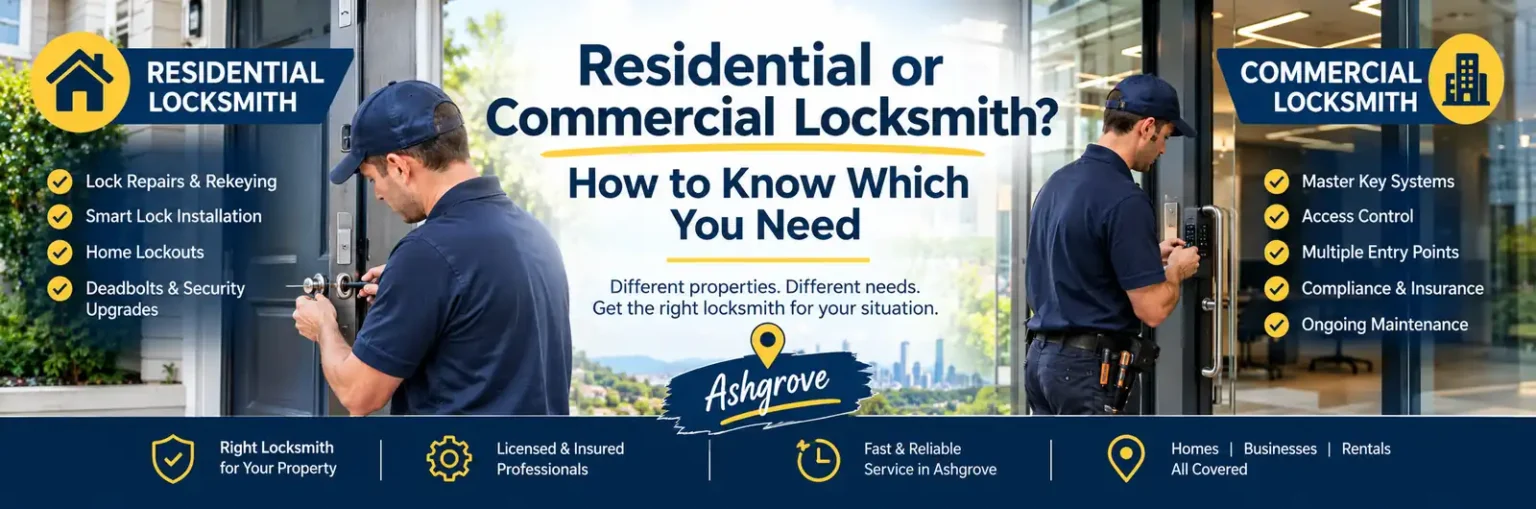
The locksmith you need depends on the property type, not the problem itself — residential locksmiths handle homes, while commercial locksmiths handle businesses, offices, and multi-access properties. Getting this distinction right matters, because the two specialise in genuinely different tools, systems, and security standards.
This guide breaks down exactly what each type of locksmith covers, the key differences between them, and how to choose the right one for your situation in Ashgrove.
Ashgrove’s mix of family homes, local shops, and small offices means both types of locksmith see steady demand, which makes knowing the right one to call genuinely useful information to have on hand.
Residential or Commercial Locksmith Which Do You Need
The property you’re securing is the clearest way to decide between the two.
What a Residential Locksmith Handles
A residential locksmith focuses on home security — lock repairs, rekeying, lockouts, and installing or upgrading deadbolts and smart locks for a standard household.
What a Commercial Locksmith Handles
A commercial locksmith works with higher-complexity security — master key systems, access control, multiple entry points, and compliance requirements that simply don’t apply to most homes.
Why the Line Isn’t Always Obvious
Some situations genuinely blur the line — a home-based business, a small office in a converted house, or a landlord managing a rental all sit somewhere between the two categories, which makes asking directly the safest approach.
Key Differences Between Residential and Commercial Locksmiths
A few core differences explain why the two aren’t interchangeable.
Security Complexity
Homes typically need straightforward, reliable security. Businesses often manage multiple staff access levels, shared entries, and higher foot traffic, which demands a more layered approach.
Equipment and Tools Used
Commercial locksmiths generally carry heavier-duty tools suited to reinforced doors, electronic access systems, and larger-scale hardware not found in most residential toolkits.
Response Expectations and Scheduling
Residential jobs are often handled as standalone call-outs, while commercial work frequently involves scheduled maintenance, multi-site coordination, or after-hours access that needs planning in advance.
Master Key Systems for Business
Businesses with multiple staff often need a structured master key system, something residential locksmiths rarely need to set up for a typical home.
Compliance and Insurance Requirements
Commercial properties often need to meet specific insurance or building code requirements around security hardware, which residential locks are rarely designed or certified to satisfy.
“The right locksmith isn’t about who’s more skilled — it’s about who’s trained for your specific kind of property.”
When to Call a Residential Locksmith
A residential locksmith is generally the right call for:
- Being locked out of your home
- Rekeying locks after moving in
- Installing or upgrading a smart lock
- Repairing a worn or faulty home lock
- Replacing lost or broken house keys
- Upgrading security after a break-in attempt
- Installing a safe for personal valuables
Each of these situations is typically a contained, single-property job, which is exactly the kind of work residential locksmiths are set up to handle efficiently.
When to Call a Commercial Locksmith
A commercial locksmith is generally the right call for:
- Setting up a master key system for staff
- Installing access control for an office or retail space
- Managing multiple entry points across a building
- Upgrading security to meet insurance or compliance standards
- Handling lock issues across a multi-tenant property
- Coordinating lock changes during staff turnover
- Installing a commercial-grade safe for business assets
These jobs typically involve more planning and coordination, which is where a commercial locksmith’s broader scope genuinely earns its value.
Choosing the Right Locksmith Near Ashgrove
Once you know which category fits your situation, a few extra checks help you choose well.
Check Experience With Your Property Type
Ask directly whether a locksmith regularly works with properties like yours — a locksmith experienced in homes isn’t automatically equipped for complex commercial systems, and vice versa.
Ask About Licensing and Insurance
Licensing requirements can differ between residential and commercial work, so confirming a locksmith’s credentials match the job is a simple step that protects you either way.
Expert tip: A genuinely experienced locksmith will tell you upfront if your job sits outside their usual scope, rather than taking it on regardless.
Mixed-Use and Rental Properties Explained
Not every property fits neatly into one category, and that’s worth addressing directly.
Landlords Managing Multiple Tenants
A landlord overseeing several rental properties often needs a locksmith comfortable working across both categories — rekeying individual units while managing broader access logistics across a portfolio.
This is common across Ashgrove’s rental market, where many properties change tenants regularly and landlords benefit from a locksmith who understands both residential turnover and the occasional commercial-style request.
Home-Based Businesses
If you run a business from home, your security needs may sit closer to commercial, particularly if clients, staff, or deliveries regularly access the property. In these cases, it’s worth describing your actual day-to-day access patterns to a locksmith rather than assuming a standard home setup will cover it.
What Affects the Cost of Each Service
While exact pricing varies by job, a few general factors explain why commercial work often costs more than residential.
Scale and Complexity of the Job
Commercial jobs typically involve more doors, more hardware, and more coordination, which naturally affects the overall scope compared to a single residential lock.
Specialised Equipment Requirements
Master key systems and access control installations require specialised programming and equipment that residential jobs simply don’t call for, which factors into the overall service involved.
Ongoing Service and Maintenance Needs
Commercial properties often benefit from scheduled maintenance checks, while residential work is usually a one-off job, which also shapes the overall value and scope of each type of service.
Why This Distinction Matters More Than People Expect
Choosing the wrong type of locksmith for the job can lead to delays, mismatched hardware, or a setup that doesn’t actually suit how the property is used day to day.
Avoiding a Mismatched Security Setup
A home-style lock installed in a business setting, or an overly complex commercial system fitted to a simple house, both create unnecessary friction for the people using the space daily.
The Cost of Getting It Wrong Later
Choosing the wrong locksmith type early on often means paying for a second, more appropriate installation down the track, which costs more time and disruption than getting it right from the start.
Getting the Right Advice From the Start
When in doubt, describe your actual situation to the locksmith rather than assuming — most will quickly tell you which category your job falls under.
Planning Ahead for Future Changes
If you expect your property’s use to change soon — a home office expanding, a rental becoming owner-occupied, or a business adding staff — it’s worth mentioning that upfront so the locksmith can recommend a setup that won’t need revisiting too soon.
Conclusion
Knowing whether you need a residential or commercial locksmith comes down to understanding your property’s complexity, not the urgency of the problem. Homes need reliable, straightforward security, while businesses need systems built for multiple people and higher-stakes access.
It’s also a distinction worth understanding before an emergency happens, rather than figuring it out under pressure when a lockout or security issue has already occurred.
If you’re still unsure which applies to your situation near Ashgrove, a quick conversation with a local locksmith is the easiest way to get clarity before any work begins.